KyschoolbreakfastchallengeCall (425) 461-1454

Kitchen Cabinetry, Bellevue, WA

Cabinets That Stay Square Through a Northwest Winter

Wood moves with the air around it, and a Bellevue kitchen spends half the year shut up tight with the heat on and the other half with the doors open to damp. We choose species, construction and finish with that in mind, so your doors still close flush in March.

  • Species samples brought to your kitchen
  • Finish shown on your door profile
  • Moisture checked before install
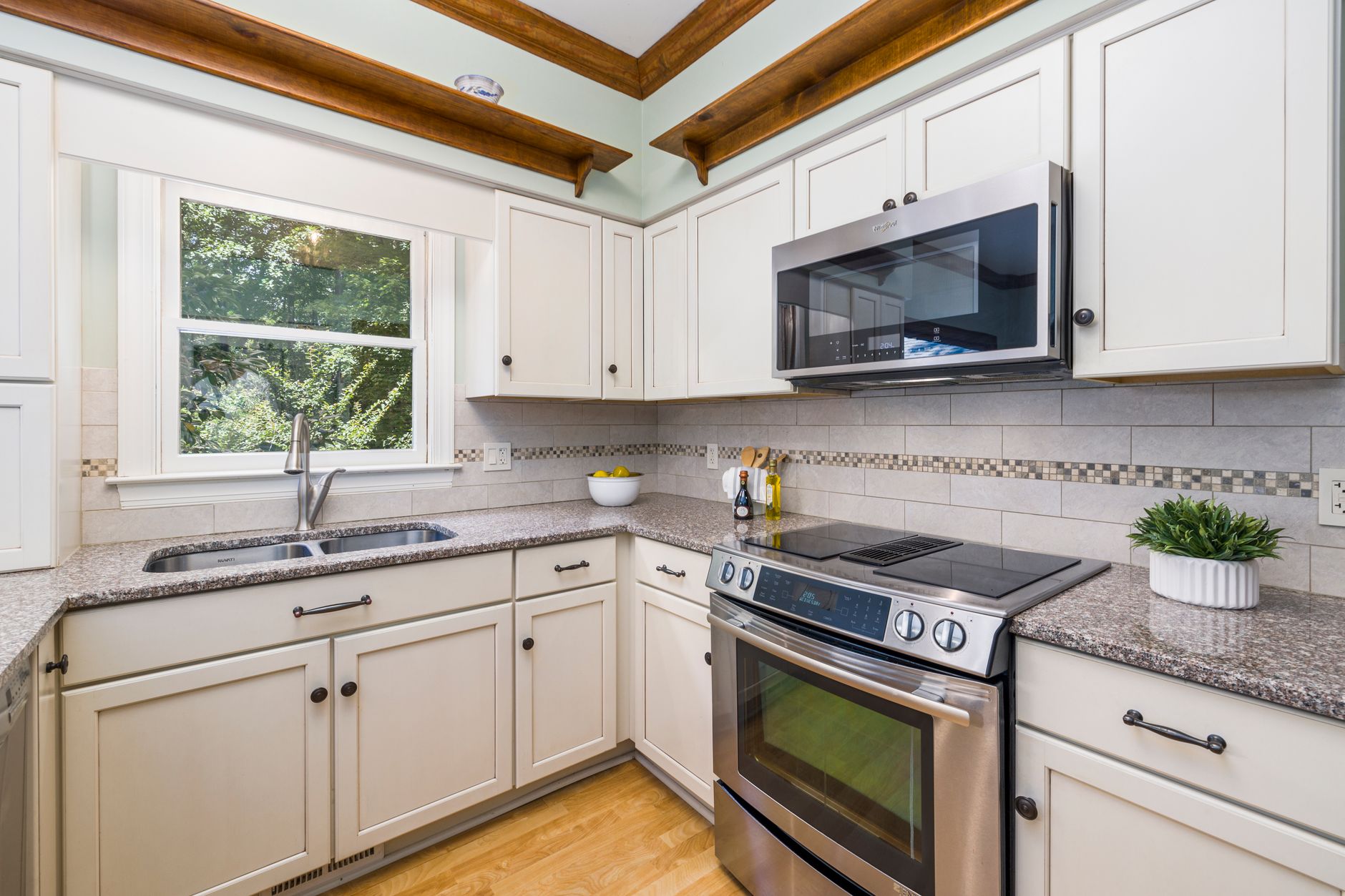
Remodeled kitchen with white raised panel cabinets, a gray granite peninsula and a glass mosaic backsplash

Cabinet Notes for Wet Climate Kitchens

Species, finishes, construction and the humidity questions Bellevue homeowners bring us.

Choosing Cabinet Wood and Finish for a Damp Bellevue Kitchen

Choosing Cabinet Wood and Finish for a Damp Bellevue Kitchen

September 13, 2026

Most cabinet disappointments we get called about in Bellevue are not caused by bad wood or careless installers. They come from a mismatch between what the cabinets were built from and the air they have to live in. A painted door with a line across every joint, an inset door that rubs in November and rattles in August, a stained panel with a pale strip showing along one edge. Each of those is wood doing what wood does, in a room nobody planned for.

This is the conversation we have at kitchen tables across the city before anything gets ordered. None of it requires buying the most expensive option. A lot of it is about knowing where money helps and where it does not.

Why Wood Moves at All

Wood is always trading moisture with the air around it. When the air is damp the fibers take on water and swell. When the air is dry they give it back and shrink. The wood settles at a moisture level that tracks the relative humidity of the room, and it keeps adjusting as that humidity changes through the year.

The movement is not even in every direction. Along its length a board barely changes at all, which is why a cabinet rail stays the same length for decades. Across its width it can move noticeably, and it moves roughly twice as much across the flat face of the growth rings as it does through their thickness. That one fact explains most of the choices below. A wide flat sawn board is the most restless piece of wood you can put in a door. A narrow rift or quarter sawn board is the calmest.

Kiln dried cabinet stock arrives at a moisture level suited to a typical heated house. The trouble starts when the house it goes into is not typical, or is typical for only half the year.

What a Bellevue Year Does to the Air Inside

People assume a wet climate means damp cabinets all year. Inside the house it is more complicated, and it depends heavily on what kind of house you have.

From October into spring, windows stay closed for months. Cooking, dishwashing, showers, laundry and simply breathing add moisture to the indoor air, and in a house that has been tightened up with newer windows, added insulation and weatherstripping, that moisture has fewer places to escape. Condensation on the inside of window glass on a cold morning is the easiest sign that indoor humidity is running high. In that kind of house, upper cabinets beside the range can sit in steamy air for an hour or more after every dinner if the hood recirculates instead of venting outside.

A leakier house behaves differently. Many of the original 1950s and 1960s ramblers in Lake Hills, Crossroads and Eastgate still exchange a lot of air with the outdoors. During a cold, clear stretch in January, outside air that comes in and gets heated ends up quite dry, and the heat running for days can pull indoor humidity down well below where it sits in September. Wood in that kitchen shrinks through the coldest weeks and swells again once the weather turns mild and wet.

Downtown condos add a third pattern. Central building systems often keep the air steadier, sometimes on the dry side, and you have less control over it. That is generally good news for cabinets, though it can make a solid wood slab door crack if it was built somewhere much damper.

Summer in Bellevue is drier than most people from outside the region expect. Doors and windows open, the air is mild, and indoor humidity usually drops from its winter high. So a single kitchen can see a real swing between a closed, steamy February and a dry, open August. The cabinet choices that work here are the ones that tolerate that swing rather than pretend it will not happen.

A cheap digital hygrometer on the kitchen counter for a few weeks tells you more about your own house than any general rule. Most homeowners are surprised by the numbers after they start watching it. Keeping indoor humidity somewhere in the middle range, neither desert dry nor fogging the windows, is good for the cabinets, the floors and the people.

Door Construction Matters More Than Species

If there is one place to spend attention, it is how the door is put together.

A five piece door is a frame of four narrow pieces, two stiles and two rails, holding a center panel that floats in a groove. The panel is not glued in, so it can swell and shrink inside the frame without pushing the joints apart. This is the traditional answer to wood movement, and it works. The frame pieces are narrow, so they move very little across their width.

A solid wood slab door is one wide flat piece, usually several boards glued edge to edge. It is the construction most exposed to seasonal movement. In a stable climate it can be fine. In a kitchen with a big humidity swing, a solid slab can cup, twist or open a hairline gap along a glue line. If you want the flat modern look, a slab built with a stable core and a real wood veneer face, or a high quality MDF slab for paint, will stay flatter than solid lumber and often costs less.

Inset doors, which sit inside the face frame with a small even gap all around, are the most sensitive to movement because there is almost no margin. A door fitted tight in dry August can bind by the end of a wet November. Inset kitchens are beautiful and they can absolutely work here, but the doors need stable stock, careful fitting for the damp season, and an adjustment visit once the weather has turned. Overlay doors, which sit on the front of the box and cover the gap, hide small seasonal changes completely. If you are on the fence about inset and your house has a big swing, overlay is the lower stress choice.

Matching the Species to the Finish

Species choice starts with one question: are you painting or showing the wood?

If you plan to paint

Hard maple is the reliable choice for painted frames. Its grain is tight and even, so paint lies smooth, and it is hard enough to resist dents from pot handles and chair backs. Poplar is softer and a little cheaper and paints well on pieces that do not take much abuse. For the center panel of a painted five piece door, MDF is often the better material than solid wood, because it moves far less and keeps the joint line between panel and frame from cracking the paint.

It is worth being honest about one thing. A thin line where a painted rail meets a stile can still appear after a couple of seasons, even on a well built door. It is the frame joint showing through the paint as the pieces move slightly. It is cosmetic, not structural, and a good sprayed finish keeps it faint. If that would bother you every day, a stained or natural wood finish, which hides the same movement, may suit you better than paint.

Open grained woods like red oak and ash can be painted, but the grain texture shows through unless the wood is grain filled first, which adds cost. If you want painted cabinets and a smooth surface, start with maple rather than paying to fill oak.

If you want the wood to show

White oak has become the favorite stained species on the Eastside for good reason. Rift sawn and quarter sawn white oak, cut so the growth rings run close to vertical through the board, has a straight calm grain and moves less across its width than flat sawn stock. It costs more per board foot. Flat sawn white oak, with its cathedral pattern, is less expensive and moves more, which matters most on wide panels.

Cherry is stable and lovely, and it changes color. It starts light and deepens toward a warm reddish brown over the first years of exposure to light. In a kitchen where one run of cabinets sits in a bright window and another stays in shade, the two will age at different rates. Some people love that. Others do not want a kitchen that changes under them, and they should hear about it before ordering.

Walnut is rich and fairly stable, and relatively soft for a hardwood, so it shows dents in a busy family kitchen. It is a good choice for an island face or a feature piece rather than every lower door.

Alder takes stain beautifully and has a warm, rustic look. It is soft enough to dent easily. Maple can be stained, but it tends to blotch with ordinary penetrating stains, so it usually needs a toner or a sealer first to color evenly.

Finishes That Hold Up Near Steam

The finish does two jobs. It protects the surface from water, grease and cleaning, and it slows how fast moisture moves in and out of the wood, which evens out the swelling and shrinking.

Shop applied catalyzed lacquer and conversion varnish are the workhorse finishes for kitchen cabinets. They cure hard, resist the splashes around a sink and the grease near a cooktop, and they are sprayed in a controlled booth where dust, temperature and film thickness can be managed. The most important part is that they are applied to every face of the door, including the back and all four edges. A door sealed only on the front takes on and releases moisture unevenly, which is one of the ways a panel starts to cup.

Site brushed paint over cabinets in place can look good on day one. It is softer, it chips at the edges where hands and dish towels rub, and it rarely seals the backs and edges as thoroughly. We generally reserve it for touch up rather than a full kitchen.

Hardwax oil and similar penetrating finishes feel wonderful and are easy to repair, but they need regular maintenance and give less protection against standing water. They are better suited to a living room built-in than to the sink base.

Thermofoil, a vinyl film pressed over an MDF core, is inexpensive and water resistant on its face. Its weakness is heat. Film on doors beside an oven or under a countertop appliance that vents warm air can loosen and peel over time. If budget points you toward a manufactured surface, a laminate or a painted MDF door is usually a more durable choice near heat.

Protect the Cabinets by Fixing the Air

Before spending extra on any species or finish, look at the ventilation. A range hood that is ducted outside and wide enough to cover the cooking surface does more for cabinet life than any upgrade in this article. A recirculating microwave hood filters grease and returns the steam straight back into the room, right into the upper cabinets beside it.

When a remodel changes the hood, the plan should account for duct size and the route to the outside, and for make-up air when the hood is powerful enough that the energy and mechanical codes require it. The same goes for bathroom fans on the same floor, because moisture from a shower wanders. None of this is glamorous, and all of it keeps doors flat.

If a moisture reading inside the sink base is high, that is a job for a plumber before it is a job for a cabinet maker. New cabinets installed over a slow leak will fail in the same place the old ones did.

Delivery, Acclimation and Timing

Cabinets should arrive in a house that already feels like a house. That means the heat is running, the drywall mud and primer have dried, and the windows are in. Installing new wood into a gutted kitchen in February, with no heat and fresh plaster still curing, is asking it to take on moisture and then shrink once the house is finished and warm.

We have boxes and doors sit inside the conditioned house for a few days before installation so they settle toward the room they will live in. Doors are fitted and adjusted, then adjusted again after the first real change of season, because that is when you find out where the wood wants to sit. Hinges on modern concealed hardware have simple adjustment screws, and a ten minute tune up at the right time keeps the reveals even for years.

Lead time is part of this as well. Custom doors in a chosen species and sprayed finish take weeks to build. Ordering early enough that nobody has to rush the install into a half finished room is one of the cheapest protections you can buy.

Where Not to Spend Money

A few honest notes, because a cabinet project can absorb any budget you give it.

  • Cabinet interiors do not need to match the exterior species. Prefinished maple plywood interiors are durable, easy to clean and far less expensive than walnut or white oak inside the box.
  • Sound boxes do not need replacing. Many 1980s and 1990s kitchens in Somerset, Woodridge and Bridle Trails have solid plywood boxes behind dated doors. New doors, fronts, veneer and hardware over those boxes give most of the visual change for a fraction of the cost.
  • Rift sawn oak on hidden panels is wasted. Use the premium cut where it shows and where panels are wide, and ordinary stock on the ends that butt against a wall or a refrigerator.
  • Inset is a style choice, not a quality upgrade. If you do not love the look, overlay doors are easier to live with in a house with a big humidity swing.
  • Upgraded drawer hardware usually beats upgraded wood. Full extension, soft close slides on dovetailed drawer boxes change how the kitchen feels every day. That is often a better use of the same dollars than a more exotic species.

Rough Numbers for Planning

Every kitchen is different, and a real number comes after a site visit and measured drawing. As a starting point for a mid sized Bellevue kitchen, refacing sound boxes with new doors, fronts and hardware commonly falls somewhere between $9,000 and $22,000. Semi custom replacement cabinets with plywood boxes run roughly $25,000 to $55,000 installed. Full custom cabinetry in chosen species, inset or frameless, with integrated panels, commonly runs $50,000 to $110,000 or more. The biggest movers are door construction, species and cut, finish type, the number of drawers versus doors, and whether the layout is changing enough to involve electrical, plumbing and permits through the City of Bellevue.

Questions Worth Asking Any Cabinet Supplier

Whoever builds your cabinets, a few questions will tell you quickly whether they have thought about the climate.

  • What are the boxes made of, and what are the door center panels made of?
  • Is the finish sprayed in a shop, and are the backs and edges of the doors finished too?
  • How do you fit inset doors for a house that is damp in winter and dry in summer?
  • Will you check moisture in the room and in the existing cabinets before ordering?
  • What do the manufacturer warranties on the finish and hardware exclude? Many finish warranties exclude damage from excess moisture or standing water, and it is better to read that before an issue than after.
  • When will you come back to adjust the doors?

If the answers are specific, you are likely in good hands. If every question gets the same answer, that it will be fine, keep asking.

If you are weighing species, finishes, or whether your existing boxes are worth keeping, call Kyschoolbreakfastchallenge at (425) 461-1454. We will bring door samples to your kitchen, take a moisture reading, and give you a straight answer, including when the smaller job is the right one.

Read the full article

Kyschoolbreakfastchallenge remodels kitchens in Bellevue with the cabinets at the center of the plan, because they are the largest share of the budget and the part that has to cope with our climate every day. Custom cabinetry, cabinet refacing, painted and stained finishes, soft-close hardware, pantry pullouts and full layout changes all start with the same question: what wood, built how, finished with what, in a room that swings between a dry furnace winter and a wet shoulder season.

Solid wood expands and shrinks across its grain as indoor humidity rises and falls. In a Lake Hills rambler with single pane windows and a range hood that recirculates, a kitchen can hold steamy air for hours after dinner from October through April, then dry out hard when the heat runs. A painted maple slab door shows that movement as a hairline crack at the joint. A wide stain grade panel in cherry or white oak can open a visible gap at its edge. Neither is a defect in the wood. Both are predictable, and the right door construction and finish choice keeps them from happening.

So we slow down at the start. We bring door samples in the species you are considering, read the moisture in your existing boxes and subfloor, look at how your ventilation actually exhausts, and talk honestly about whether your cabinet boxes need replacing at all. Plenty of 1970s and 1980s kitchens in Somerset and Bridle Trails have plywood boxes that are still perfectly sound under tired doors. In those houses refacing is the better use of money, and we will say so.

  • Species decides the finishMaple and birch take paint smoothly. Open grained oak and ash show texture through paint. Cherry darkens with light for years. Knowing that up front avoids a finish that fights the wood.
  • Five piece doors for paintA painted door built as a frame and floating center panel lets the panel move without cracking the finish. A one piece painted slab in solid wood is asking for trouble in a damp climate.
  • Ventilation protects the boxesA hood ducted outside at the right capture size does more for cabinet life than any finish. Steam that stays in the room ends up soaking into the upper boxes beside the range.
  • Eastside Homes We Measure For

    Mid-century ramblers, split-levels, larger 1980s and 1990s houses and downtown condos across the city, each with its own cabinet quirks.

    • Bellevue, WA (98004, 98005, 98006, 98007, 98008)
    • Lake Hills and Crossroads
    • Eastgate and Newport Hills
    • Somerset and Woodridge
    • Bridle Trails
    • Downtown Bellevue condos and high-rises

    Condo owners, please have your building's renovation rules and freight elevator booking process handy when you call (425) 461-1454. It shapes the delivery schedule.

    Cabinet Work Built Around Bellevue Weather

    Everything below is about the cabinetry, because that is where a kitchen either ages well or starts to look tired in a few winters.

    Custom Cabinetry

    Boxes built to your room in furniture grade plywood, framed or frameless, with inset or overlay doors in the species and finish you chose from real samples. Sized to your walls, not to the nearest stock width.

    Cabinet Refacing

    New doors, drawer fronts and matching veneer over sound existing boxes, with new hinges and slides. The layout stays, the kitchen stays usable most of the job, and the cost is a fraction of new cabinets.

    Species and Finish Consultations

    We bring maple, white oak, rift oak, cherry, walnut and alder samples, painted and stained, and hold them against your floor, counters and window light at different times of day before anyone orders.

    Painted Cabinet Specialty Work

    Catalyzed or conversion varnish finishes sprayed in a controlled shop, on door styles that suit paint. Built so the finish survives steam, cleaning and the daily handling around the sink and dishwasher.

    Interior Organization

    Full extension drawers in place of lower doors, pullout pantries, tray dividers over the oven, corner solutions that actually get used, and trash pullouts sized to the bins you already own.

    Kitchen Layout Remodels

    When the cabinets are changing anyway, we look at the work triangle, aisle widths of 42 to 48 inches, and whether the sink and range really need to move before the plumber and electrician are booked.

    Wood, Paint and Moisture Questions

    Which wood species hold up best in a Bellevue kitchen?
    Hard maple and white oak are the steady choices. Maple is dense and closed grained, so it paints cleanly and dents less. Quarter sawn or rift sawn white oak moves less across its width than flat sawn boards, which helps in a room that swings between damp and dry. Cherry and walnut are beautiful and stable enough, but cherry darkens noticeably with light and walnut shows every scratch in a busy kitchen. Soft species like alder are lovely stained, and they will dent.
    Will painted cabinets crack in our climate?
    They can, at the joints of a five piece door, where the rails meet the stiles. A thin line there is normal wood movement showing through paint, not a failure. You reduce it with a door built from medium density fiberboard center panels or a stable engineered frame, a sprayed catalyzed finish rather than brushed latex, and a hood that clears steam. We show you a sample door that has been through a season so you know what to expect.
    Should I reface or replace my cabinets?
    Open the doors and look at the boxes. If they are plywood, square, dry under the sink and fastened solidly to the wall, refacing keeps the good part and replaces the tired part. If the boxes are swollen particleboard, the layout does not work, or you are moving the sink or range, replacement is the honest call because you would be putting new doors on a kitchen you still dislike.
    What does the process look like, start to finish?
    A visit with samples and a moisture reading, then a measured drawing and written quote. Once you approve it, custom cabinets typically take eight to twelve weeks to build and refacing doors four to six. Demolition, any electrical or plumbing rough-in and the city inspections come next, then boxes, then the countertop template, counters and finish work. We give you a dated schedule and tell you early if a supplier slips.
    What warranty comes with the cabinets?
    Hinges, slides and many factory finishes carry their own manufacturer warranties, and we pass those along in writing with the model numbers. Our own workmanship terms are written into the contract before work starts, so you can read exactly what is covered and for how long rather than taking a verbal promise.
    Can the cost be spread out or done in phases?
    We do not lend money, but we can structure a job so it is easier to budget. Payments are tied to milestones such as order, delivery and completion rather than one large sum up front. Some homeowners reface now and replace a single run, like the pantry wall, later. If you plan to use a home equity line, talk to your lender before we set the start date.

    Budgeting by Box, Door and Finish

    Cabinet cost moves with construction, species and finish much more than with the number of boxes. A mid-sized Bellevue kitchen usually lands in one of these ranges, and a written quote follows a site visit and a measured drawing.

    Cabinet Refacing$9,000 to $22,000
    • New doors, drawer fronts and veneer
    • New soft-close hinges and slides
    • Existing sound boxes kept
    Ask about refacing
    Semi-Custom Replacement$25,000 to $55,000
    • Plywood boxes, standard widths with fillers
    • Painted or stained maple and oak
    • Tear out and install included
    Get a quote
    Full Custom Cabinetry$50,000 to $110,000
    • Built to your room, inset or frameless
    • Any species, rift and quarter sawn options
    • Integrated panels and pantry systems
    Book a consultation

    Bring a Door, We Will Bring the Moisture Meter

    The most useful hour of a cabinet project is the one where real wood samples sit on your counter in your own light, and we check whether your existing boxes are worth keeping. Call to set that visit up. If refacing is the smarter move for your kitchen, you will hear it from us first.

    Call (425) 461-1454